
When pool owners sanitize their pools with chlorine tablets or granular shock, they might have heard about high calcium hardness and cloudy water. Some people may even think that calcium hypochlorite tablets are the ones responsible for secretly pushing the hardness levels up, especially if used throughout the hot season. So, the short answer is: yes, using calcium hypochlorite tablets always means that you are adding both chlorine and calcium to the pool. The thing is, how much calcium is being added, at what point it becomes a problem, and what can be done about it.
Table of Contents
-
-
-
-
-
-
-
-
- What Is Calcium Hardness?
- What Are Calcium Hypochlorite Tablets?
- How Much Do Calcium Hypochlorite Tablets Raise Calcium Hardness?
- When Does Extra Calcium Become a Problem?
- How to Monitor Calcium Hardness When Using Cal Hypo Tablets?
- Strategies for Managing Calcium Hardness
- Are Calcium Hypochlorite Tablets Perfect for Your Pool?
- Selecting Calcium Hypochlorite Tablets of Superior Quality
- Conclusion
-
-
-
-
-
-
-
Through this guiding post, we will clarify how calcium hardness functions, what the difference is between calcium hypochlorite tablets and other kinds of chlorine, and how to use them in a way that you get all the sanitizing power without causing scaling, cloudy water or rough surfaces in your pool.
What Is Calcium Hardness?
Calcium hardness refers to the amount of dissolved calcium present in the pool water. It is typically given in parts per million (ppm). The presence of some calcium in water is beneficial as it safeguards plaster, grout and concrete from being worn away or dissolved by water with high aggression. The most common and good range for a pool is approximately 200–400 ppm as per the surface type and the overall water balance.
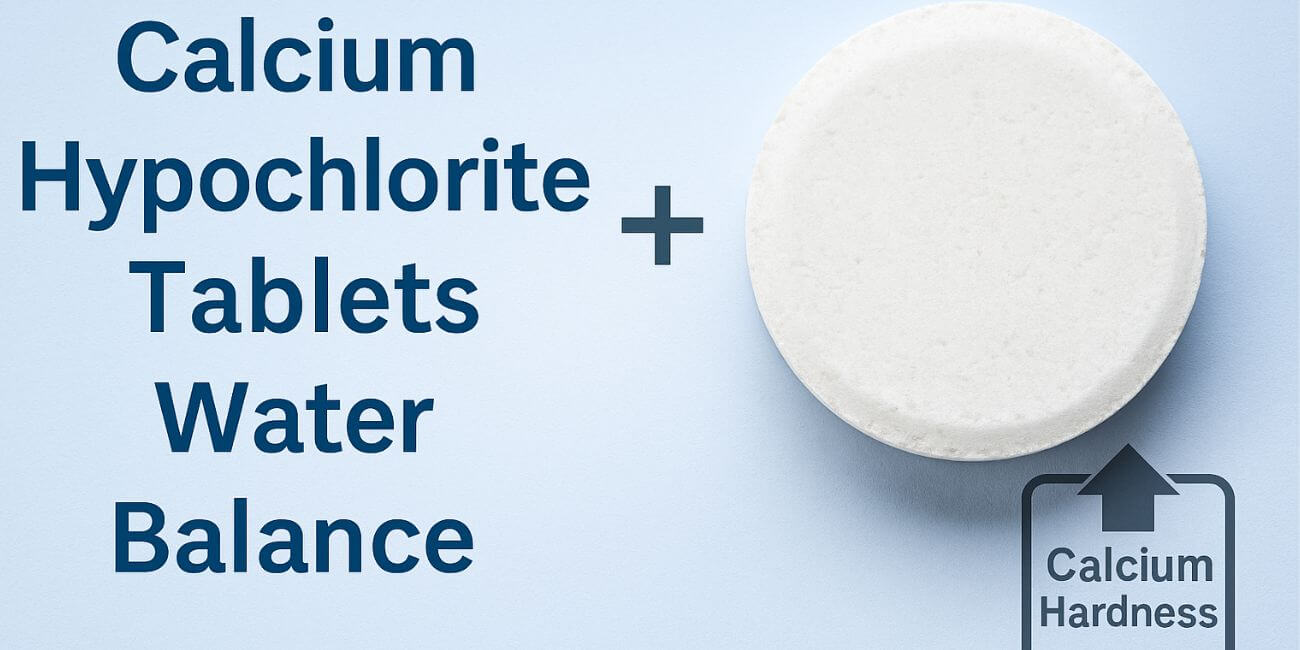
If the calcium hardness level drops too low, the water will start to extract minerals from the pool walls and any equipment it can find. Such situations will lead to pitted plaster, corrosion of metal fixtures and shorter equipment life. Conversely, if the calcium hardness level goes beyond the 400 ppm line, the water becomes scaling. White crusty deposits can be seen on the tile lines, heater elements and salt cells, and the water might be cloudy that is difficult to clear.
Calcium does not evaporate and thus, whenever you add more calcium to the pool, it will stay there until you physically remove some and replace it with fresh water. Therefore, it is crucial to consider if your choice of sanitizer including calcium hypochlorite tablets which is used regularly, is adding extra calcium every week.
What Are Calcium Hypochlorite Tablets?
Calcium hypochlorite is the solid state of chlorine and it is usually composed of 65–75 percent of available chlorine approx. It is predominantly marketed in loose granular form as shock treatment. Though, manufacturers are increasingly converting this material into slow-dissolving calcium hypochlorite tablets for applications in skimmers, feeders, and floating dispensers.
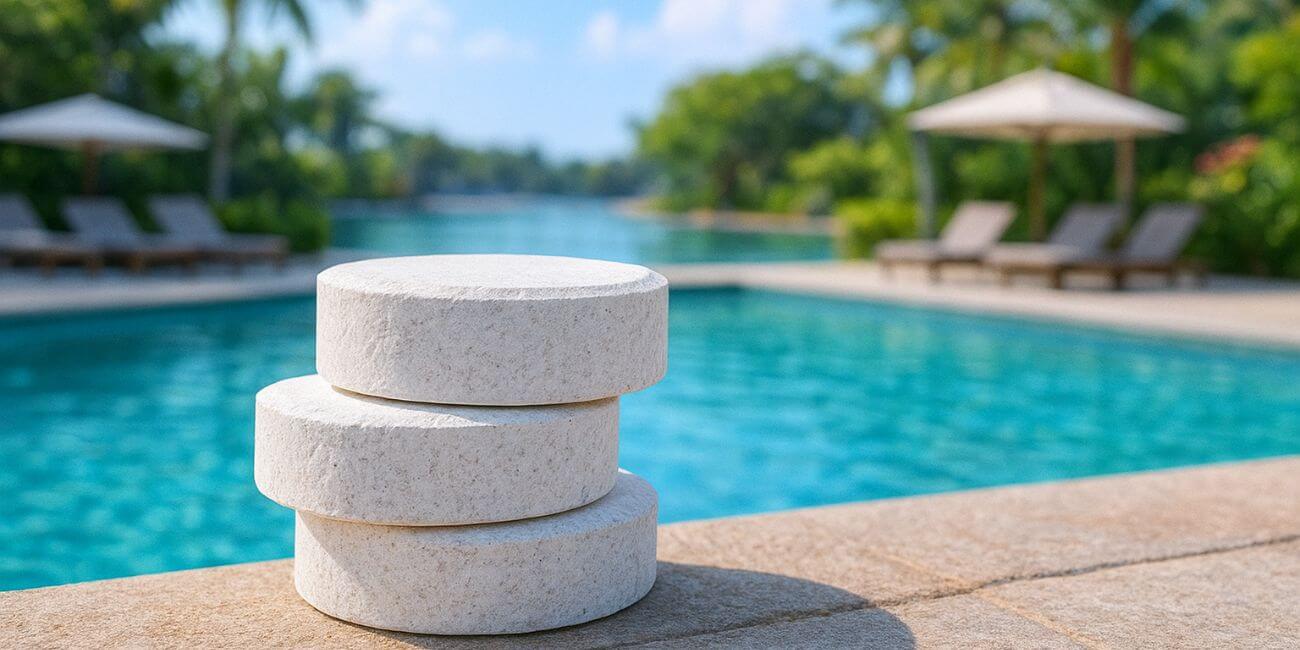
Calcium hypochlorite tablets are also similar to trichlor tablets in that they offer a convenient, slow-release method of free chlorine. You place the tablets into the selected feeder, and they slowly dissolve thus keeping the chlorine residual steady. The major difference is in the side effects that come along. Trichlor, with every dose adds cyanuric acid (stabilizer) while hypochlorite tablets adds calcium instead.
Purely from the chemical viewpoint, calcium hypochlorite in water forms calcium ions and hypochlorous acid which is chlorine’s active sanitizing form. Hypochlorous acid is finally oxidized or sunlight breaks it down thus going off in the form of gas. The calcium ions are left behind and they help to raise the pool’s calcium hardness directly.
How Much Do Calcium Hypochlorite Tablets Raise Calcium Hardness?
Every chlorine product has its drawbacks and extra calcium is the main drawback of Cal Hypo tablets. A general rule is that for every 10 ppm of free chlorine added from Cal hypo, about 7 ppm of calcium hardness is added. The exact amount varies a bit with the strength of the product, but the main concept is still the same: the more you depend on calcium hypochlorite for daily chlorination and shocking, the faster the calcium hardness will increase.
In a short season or in places that have lots of rain and splash-out, the rising of calcium hardness may not be very noticeable. But in very hot, dry areas where the pools are open for almost a year and there is no natural dilution at all, it can be very noticeable. A pool that has 250 ppm hardness at the beginning of the season can easily go past 400 ppm after several months of heavy use of calcium hypochlorite tablets. The situation will be worse if the water coming into the pool has high calcium levels, as the increase in calcium hardness will be even faster.
When Does Extra Calcium Become a Problem?
Water’s high calcium hardness is not an immediate sign of a disaster. Whether the water will scale, be aggressive, or be nicely balanced is dependent on a combination of factors such as pH, temperature, and total alkalinity. This overall situation is often represented by the Langelier Saturation Index (LSI), which predicts the tendency of water to either dissolve or deposit calcium carbonate.
However, the climbing of calcium hardness very high over 400-500 ppm especially in warm water, it becomes very easy for small pH changes to push the water into the scaling area. You might notice the following at that time:
- Water is cloudy and not responsive to normal filtration.
- Plaster surfaces are rough or have sandpaper-like texture.
- White scale is present on tiles, fittings, and waterline.
- Heaters or salt cells have scale inside them that reduces efficiency.
- Equipment needs more acid cleaning frequently.
Calcium hypochlorite tablets add calcium that does not leave the pool on its own, therefore, the risk builds up during multiple seasons unless you manage it actively.
How to Monitor Calcium Hardness When Using Cal Hypo Tablets?
Testing will be the most important step to follow through. If you are determined to sanitize the pool through the calcium hypochlorite tablets method, then testing hardness at least once a month should be part of your swimming season plan, and even more in the event of cloudiness or scale. In addition, don’t forget to choose a reliable method for getting your hardness readings whether it be a good liquid drop test or water testing at a laboratory.
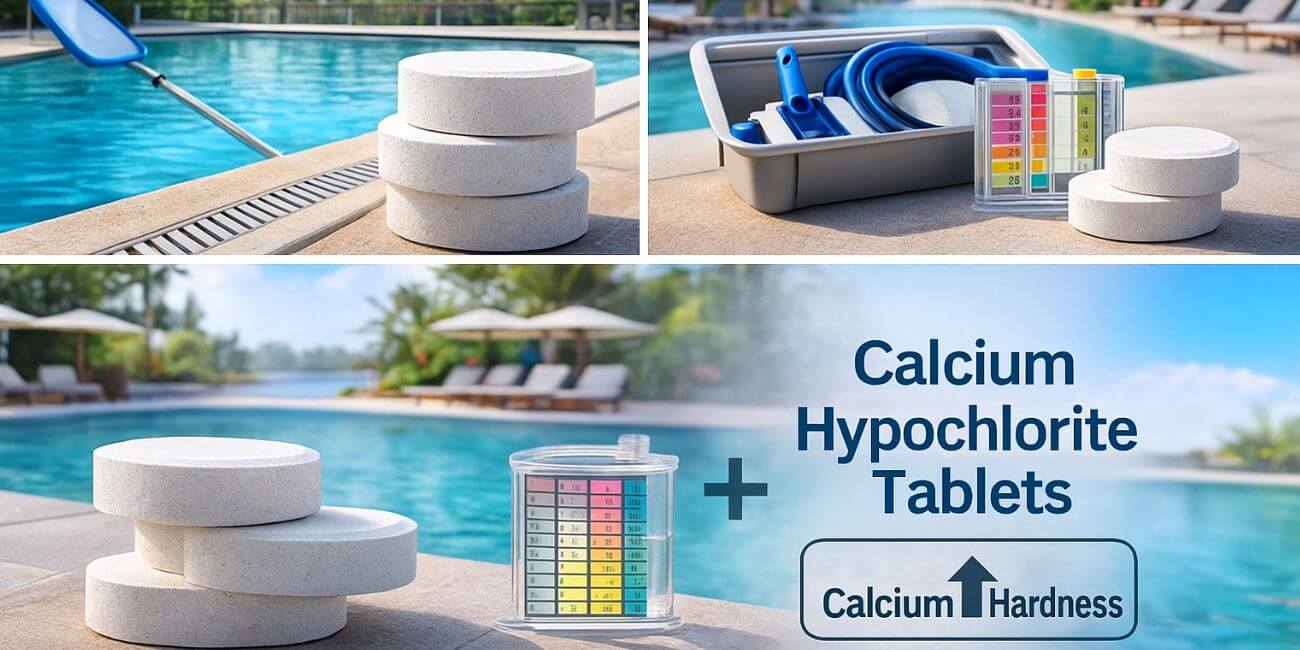
Keep a simple log for your results. The log should include calcium hardness, pH, total alkalinity, and water temperature, along with the number of calcium hypochlorite tablets you are using every week. In the long run, you will be able to know how your particular pool reacts. This will greatly help you in deciding when to make changes to your treatment plan before issues arise.
Strategies for Managing Calcium Hardness
When your hardness is just about to reach the upper limit of the allowed range, you don’t have to give up calcium hypochlorite tablets. But you might want to think about several practical solutions:
1. Partial Drain and Refill
The simplest method to lower calcium hardness is to pull out some water and put in a lower-calcium source. Even replacing 20-30 percent of the water can really have an impact, especially when the hardness is extremely high. This is usually done at the end of a season, but in warm regions, it might also be necessary in the middle of the season.
2. Mix Sanitizers
Instead of completely depending on calcium hypochlorite tablets, you can mix the ways. For instance, use tablets for normal maintenance but switch to liquid chlorine or a saltwater chlorine generator for shocking or high demand periods. In this way, you still get the comfort of tablets while reducing the rate at which hardness rises.
3. Control pH and Alkalinity
It is difficult to deal with high calcium hardness when pH and alkalinity are also high. If you rigorously monitor pH in the 7.2-7.6 range and keep total alkalinity in the recommended band, you can have your LSI balanced even with high hardness. Consequently, there will be less tendency for scaling to drop out of solution.
4. Use Lower-hardness Source Water When Possible
If your municipal or well water is very hard, check if you can partially fill or top up with softer water from an alternative source, such as harvested and filtered rainwater that has been treated correctly. Some pool owners in extremely hard-water regions even truck in lower-hardness water at the beginning of the season to give themselves more leeway for using Cal hypo tablets.
5. Physically Remove Scale Early
In case you notice early scale signs, like a thin white line at the waterline or small rough spots on the fittings, get rid of them quickly by using the right cleaning tools and chemicals. Trying to prevent and remove deposits at an early stage is a lot easier than having to deal with thick and stubborn ones later on.
Are Calcium Hypochlorite Tablets Perfect for Your Pool?
Although the calcium has its own weakness point, the calcium hypochlorite tablets are still a very good choice for a lot of swimming pools. They do have some clear advantages as follows:
- Very powerful and fast oxidation assist for extermination of algae and bacteria.
- Comparison to trichlor or dichlor products has minimal stabilizer build-up.
- Constant state, hard and compact that is not only good for storage but also for dosing.
- Cool and dry storage will provide a longer shelf life.
In case you have water that is relatively soft and your backwashing is heavy and infrequent or the area you live in has frequent rain, the extra calcium from the hypochlorite tablets may be helpful and it may also keep the hardness in the ideal range. However, if you are situated where there is already high calcium level, have a plaster pool, and work in a dry area with lots of evaporation, you will have to be extra careful.
One prudent way is to commence the season with the calcium hardness at the lower end of the range recommended, thereafter, keep a close eye on it as you use the calcium hypochlorite tablets. In case hardness rises too fast, you can take measures by partially draining, mixing with other forms of chlorine, or reducing tablet use.
Selecting Calcium Hypochlorite Tablets of Superior Quality
A product’s quality is not of equal standard in all cases. Professional suppliers like Qc Industry offer top-grade calcium hypochlorite tablets that will dissolve more uniformly, virtually no residue, and will guide you with clearer dosing. Tablets with the chlorine content percentage prominently displayed, and with less than the prescribed amount of insoluble and moisture-free packaging would be your best pick. Always keep them in a cool, dry place with good ventilation and far from other chemicals.
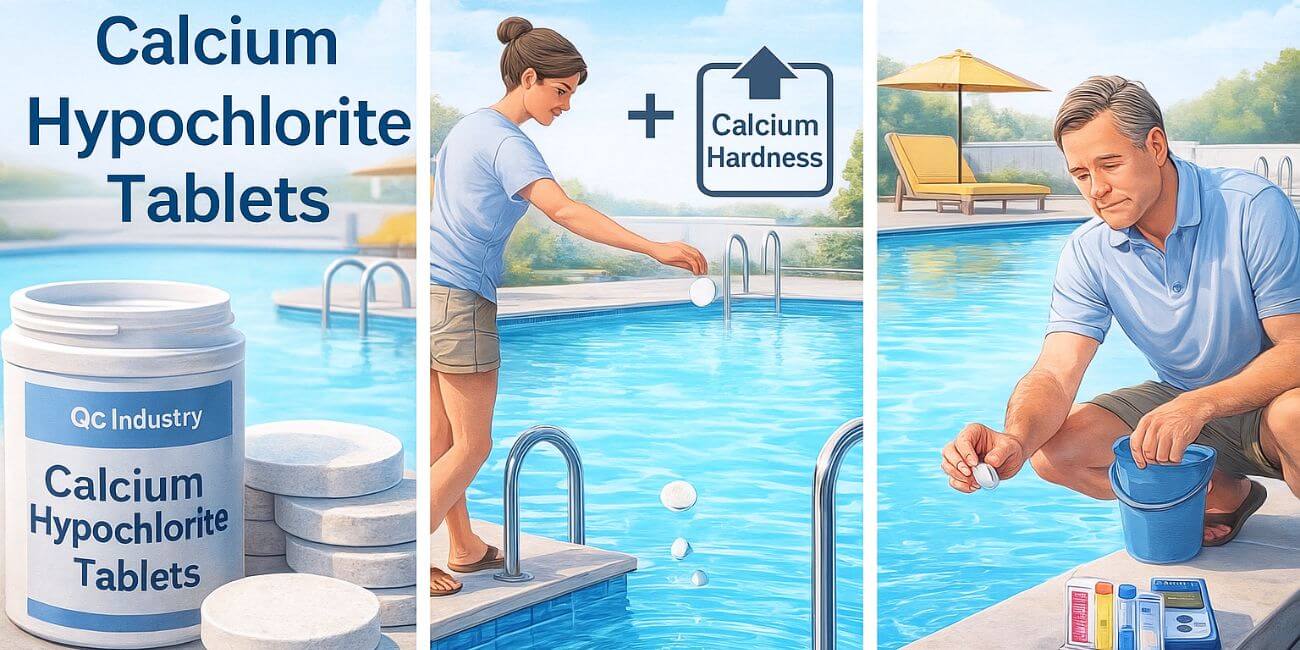
Moreover, it is advisable to go through the handling instructions very thoroughly. Cal hypo tablets are strong oxidants, and combining them with other pool chemicals, especially trichlor tablets, poses a risk. Always observe the manufacturer’s instructions and put the products into the water one at a time.
Conclusion
Calcium hypochlorite tablets definitely increase the calcium hardness of pools. The addition of every tablet means a proportion of both chlorine and calcium. This gradual build-up is especially true for pools where the initial fill water is hard, and there is very little turnover. In such cases, the extra calcium can eventually move the hardness to the scaling area; consequently, problems such as cloudy water, rough spots, and equipment failure can occur.
The positive part of this scenario is that you can customize your solution. You can use the testing practice, the monitoring of your results, and the application of the partial drain and refill, blended sanitizing methods, and pH and alkalinity tight control, etc., to enjoy the convenience as well as the benefits of the calcium hypochlorite tablets without compromising the long-term water balance at the same time. When these tablets are used with a considered maintenance program, they can be a very effective and dependable element of your pool care routine. Their effectiveness can be even further enhanced when sourced from trustworthy suppliers like Qc Industry.