
If you have ever taken a stroll to your swimming pool only to find cloudy water, a small amount of algae, or the overpowering “chlorine smell,” you have already become acquainted with the situations in which calcium hypochlorite shock comes to the rescue. Routine daily chlorination is the main procedure, but at times, your pool will require a stronger reset. That is precisely what shock is for – and cal hypo is one of the most used and effective types.
Table of Contents
-
-
-
-
-
-
-
-
- What Is Pool Shock, Anyway?
- What is Calcium Hypochlorite Shock?
- How Does Calcium Hypochlorite Shock Work?
- When Shall You Employ Calcium Hypochlorite Shock?
- Calcium Hypochlorite Shock: Pros and Cons
- Step by Step Guide on How to Use Calcium Hypochlorite Shock
- Cal Hypo Shock for Calcium Hardness Management
- Is It the Right Moment for Your Pool to Get a Calcium Hypochlorite Shock?
- FAQs About Calcium Hypochlorite Shock
- Conclusion
-
-
-
-
-
-
-
This article dissects the process of calcium hypochlorite, the way of working, the right time for usage, and safe dosing so that you will always have a clear, clean, and comfortable pool for all the summer months.
What Is Pool Shock, Anyway?
By “shocking” a pool, it is only meant that the a high dosage of oxidizing sanitizer is added in a short time to:
- Microorganisms and algae are killed.
- Oxidation of sweat, body oils, cosmetics, leaves, and other organics takes place.
- Chloramines (the compounds that cause strong chlorine odor and irritation) breakdown.
- Free chlorine is rapidly raised when levels have dropped too low.
Shocking is not a daily practice. Rather, you treat with calcium hypochlorite shock as an intensive treatment in addition to the normal sanitizer routine.
What is Calcium Hypochlorite Shock?
Calcium hypochlorite, to put it simply, is a solid compound that is typically sold as a white granulated or powdered product. The most of calcium hypochlorite shock formulations have about 65–75% of available chlorine, which makes them super-strength, concentrated types of pool chlorine.
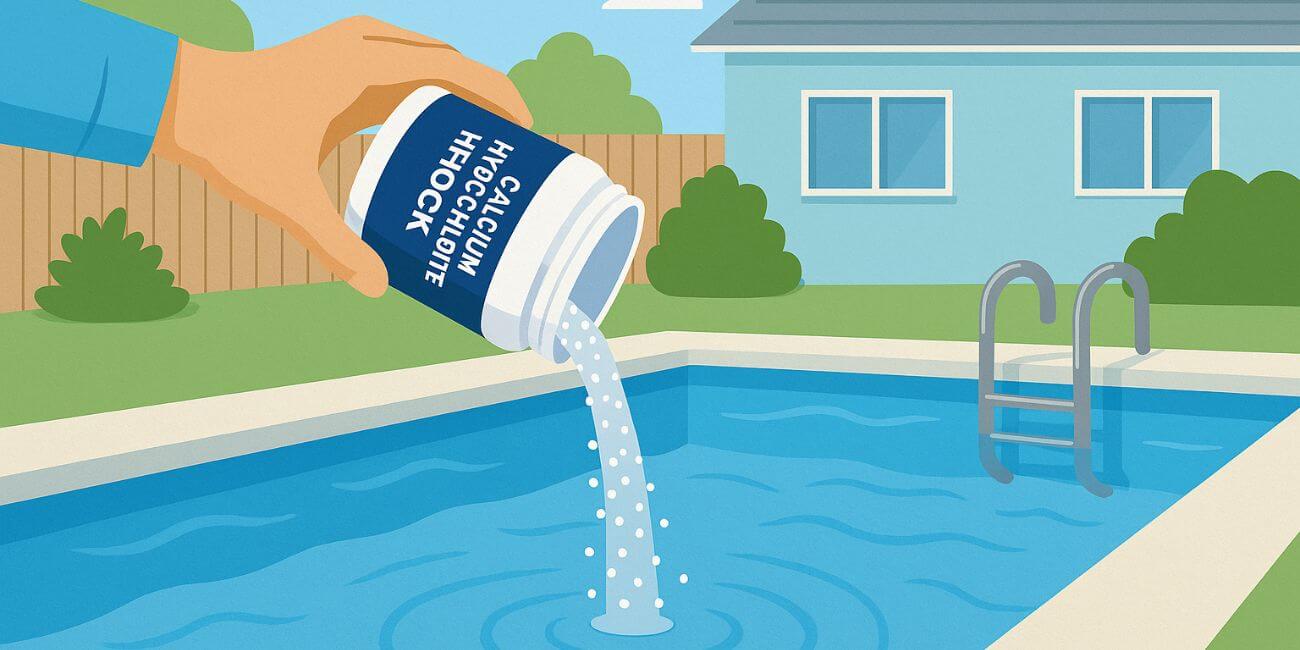
Also, you may come across its synonyms like:
- Cal hypo shock
- Calcium hypochlorite pool shock
- Cal-hypo granular shock
Calcium hypochlorite shock differs from slow-dissolving tablets in that it allows for occasional, larger doses, and is, therefore, a more sporadic treatment. It is meant for the rapid increase of chlorine, oxidizing heavy contaminants, or saving a pool from turning green.
Moreover, cal hypo is an unstabilized chlorine source, which by implication means that it does not have cyanuric acid (CYA) the stabilizer that shields chlorine from sunlight. Therefore, it becomes a suitable choice when your CYA level is already high and you don’t want to add to it.
How Does Calcium Hypochlorite Shock Work?
When you apply shock of calcium hypochlorite to pool water, it dissolves by releasing hypochlorous acid (HOCl), which is the active form of chlorine taking care of disinfection and oxidation.
HOCl works as a constant disinfectant at the normal daily level (about 1–3 ppm free chlorine). When you add cal hypo at shock levels, you quickly increase free chlorine to much higher levels – sometimes even above 5–10 ppm.
Then it can:
- Tear down algae walls
- The microorganisms that kill bacteria and viruses
- Purify larger amount of dead orgs
- Eliminate chloramines and other combined chlorine compounds
Cal hypo is also alkaline with high pH, so a large dosage of calcium hypochlorite shock will increase your pool’s pH temporarily. After treatment is over, you will normally test and adjust pH back to the perfect 7.2–7.6 range.
Being a calcium-based product, this type of shock will keep on adding a little bit of calcium hardness every time you use it. This is a plus in soft water, but needs to be kept an eye on in hard water regions.
When Shall You Employ Calcium Hypochlorite Shock?
The use of calcium hypochlorite overnight is not based on the full-blown algae bloom. It can, however, be applied as a preventive measure, in this way, saving you the trouble of many problems that might have cropped up.
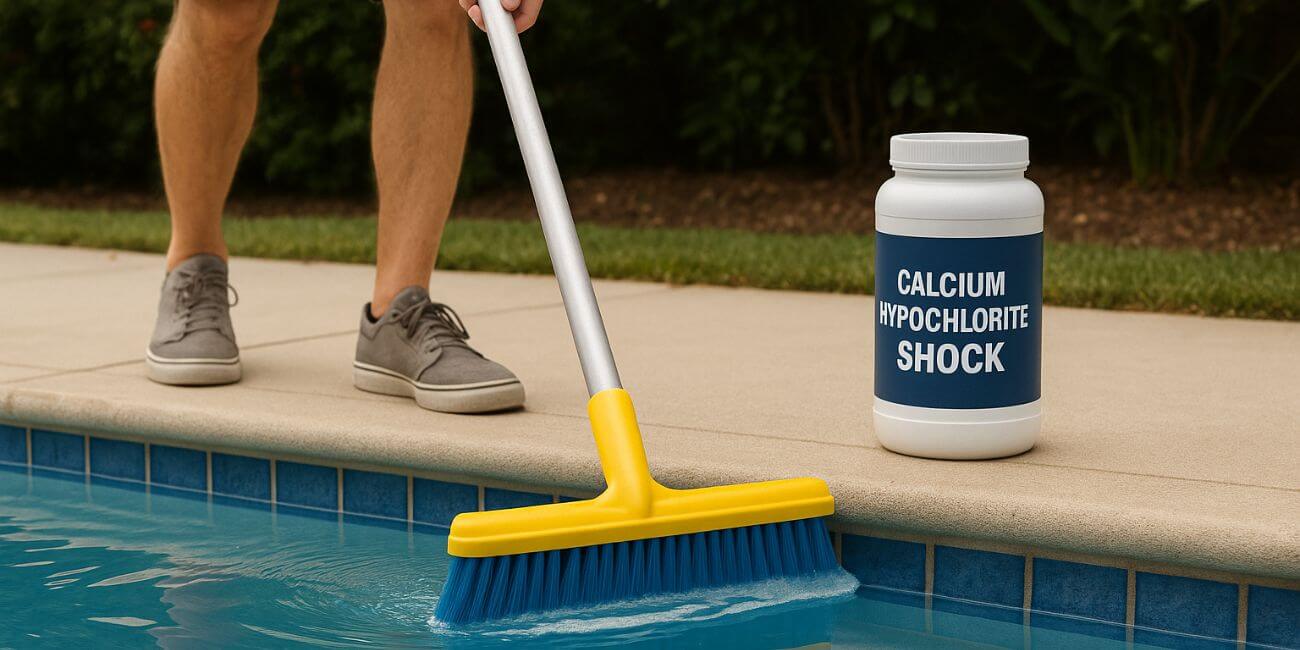
1. Weekly or Routine Shocking
Most of the pool owners and operators usually shock the pool every week in the summertime. The weekly calcium hypochlorite shock treatment gets rid of the residues of dirt and chloramines gradually, which allows your sanitizer to function more effectively and maintaining the freshness of the water.
2. After the Heavy Use of Pools
Did you throw a big pool party? Kids playing while going in and out of the pool all day long? That’s a lot of sweat, sunscreen, make-up, and organic waste. Cal hypo shock post-heavy bather load helps to prevent cloudiness, odor and algae, and keeps them from showing up eventually.
3. After Storms, Rain, or Debris Events
Strong winds and rains bring in dust, dirt, and plant materials might also reduce the chlorine level. Once you are done with skimming and vacuuming, a dose of calcium hypochlorite shock will not only reactivate the sanitizer strength but will also oxidize what your filter does not capture.
4. When Algae is Visible
If you spot any green or yellowish patches, it is time to act. The combo of thorough brushing and a robust dose of calcium hypochlorite shock is among the quickest methods to get back the upper hand.
5. When Chloramines are High
Typical causes of the strong chlorine smell, red eyes, and itching are chloramines but not “too much chlorine”. The shock treatment is the one that breaks apart the chloramines. Regular treatment with calcium hypochlorite shock brings back a fresh, neutral odor and more pleasant water.
6. Closing, opening, and winter care
In regions with freezing climates, cal hypo is very often applied during the closing of a pool for winter and the opening in spring. In certain systems, low and periodic doses of cal hypo during winter prevent covered pools from getting green and turning into ponds.
Calcium Hypochlorite Shock: Pros and Cons
Calcium hypochlorite shock is among the pool chemicals that show benefits and drawbacks.
Pros
- High available chlorine: A potent, concentrated product allows one to have less volume to store and handle.
- Unstabilized: Zero cyanuric acid is added, which is particularly good when the CYA level is at the target or high.
- Good value and long shelf life: The related products can be kept in a cool, dry, and ventilated place without losing quality.
- Versatile: It can be used in various types of pools and is frequently applied in both residential and commercial systems.
Cons
- Raises pH: After heavy use, pH monitoring and adjustment is needed.
- Adds calcium hardness: Over time, the continuous use of calcium hypochlorite can lead to a situation where the hardness of the water becomes higher, especially in areas where the water is hard.
- Possible temporary cloudiness: Depending on water balance and temperature conditions, the water may become cloudy for a while after being shocked.
- Strong oxidizer: Great care must be taken while handling it, separate storage from other chemicals is necessary, and it must never be mixed directly with other chlorine products or acids.
Step by Step Guide on How to Use Calcium Hypochlorite Shock
Always stick to the instructions on the product label. Different strengths and brands (for instance, from suppliers like Qc Industry) may have slightly different directions. The procedure is outlined below as a general guide:
1. Monitor and Adjust the Water
Prior to pouring in the calcium hypochlorite shock, test the following indicators:
- Free chlorine
- pH
- Total alkalinity
- Calcium hardness
In case the pH is extremely high or low, first rectify it to increase the effectiveness of the shock treatment.
2. Determine the Required Amount
A general rule to follow is:
- 1 pound of cal hypo for 10,000 gallons pool water to increase the free chlorine concentration by approximately 5–10 ppm, depending on the strength being used.
For heavy algae or a very dirty pool, you might need to apply more. If the label indicates the usage, always apply the dose recommended by the manufacturer rather than estimating.
3. Apply at Dusk or During the Night Time
The reason being that since cal hypo is unstabilized, it will be burnt off quicker by the sun. The practice of calcium hypochlorite shock application at dusk allows the chlorine to be effective throughout the night with very little UV loss, making the treatment more efficient.
4. Dissolve Beforehand or Scatter (as per the directions)
Your product’s label will instruct you to:
- Dissolve in a bucket of clean water, then pour evenly around the pool.
- Scatter directly over the water surface with the pump running.
Regardless of which method is mentioned on the label, keep in mind:
- Add shock to water, never water to shock.
- Evenly distribute it around the pool.
- Brush any remaining granules from the bottom so they do not get stuck in one place.
5. Operate the Pump and Be Patient
Calcium hypochlorite shock will be evenly distributed throughout the pool if the circulation system is on for hours. Most of the recommendations suggest that swimming should not be allowed until the free chlorine level drops back to the normal ranges which is usually around 1–3 ppm for residential pools or according to your local regulations.
6. Retest and Adjust
When the chlorine shock treatment has completely taken its course:
- Retest free chlorine to make sure it is at a safe level.
- Test the pH level and if it is too high after the treatment, then correct it.
- If the water is still cloudy or if there is still any algae, you might have to do more brushing, filtration, or even another round of shocking, particularly in a severe case.
Cal Hypo Shock for Calcium Hardness Management
Calcium hypochlorite shock treatments increase the calcium content in the pool slightly with each application, so it is a good idea to monitor the hardness level through the entire swimming season:
- When you have very soft source water, the additional calcium could perhaps be benefitting the plaster and grout by protecting them.
- If your water is hard already, then carry out monitoring of hardness on a monthly basis. If levels become too high, then a partial drainage followed by refilling with water of lower hardness is usually the most efficient solution.
Properly balancing pH and total alkalinity also helps to minimize scale even if the calcium level is on the higher side.
Is It the Right Moment for Your Pool to Get a Calcium Hypochlorite Shock?
Most of the time, the response is affirmative. Calcium hypochlorite shock is extremely beneficial if:
- You are looking for a robust and fast-acting chlorine shock.
- Your CYA level is already optimal and you want to maintain it.
- You favor a dry product that is easy to store over the hassle of dealing with huge quantities of liquid bleach.
If you happen to be in an area with extremely hard water or you already have high calcium hardness, you can still apply cal hypo – only do it with more testing, occasional water replacement, or by alternating with other shock types.
When used correctly, calcium hypochlorite shock is one of the most powerful tools you can have for keeping pool water clean, clear, and genuinely comfortable to swim in.
FAQs About Calcium Hypochlorite Shock
1. What is calcium hypochlorite shock?
Calcium hypochlorite shock, the name itself suggests, is pure chlorine super-chlorination applied through granular or powdered forms. The product consists of a large available chlorine constituent and is very much aimed at elevating free chlorine level so quickly that the very first ones will be wiped out very fast including: algae, bacteria, and all others.
2. How often should I use calcium hypochlorite shock?
In the regular pool maintenance during the swimming season, a number of pool owners use calcium hypochlorite shock once a week. Besides this, you should also do shock treatment after heavy usage, storms, and when you see visible algae or smell strong chlorine which may indicate chloramine being built up.
3. Can I use calcium hypochlorite shock in a saltwater pool?
Absolutely! Even saltwater pools sometimes need a bit of extra help during heavy load or algae events. You can humid and ulti-mostly saltwater pools along with calcium hypochlorite shock to elevate chlorine level and eliminate all sorts of contaminants but for it to work. More importantly, you have to follow the manufacturer’s guide and monitor the calcium level.
4. Does calcium hypochlorite shock increase calcium hardness too much?
Calcium hardness increases with every treatment but not too much. A moderate use of calcium hypochlorite shocks is really not a problem and sometimes even beneficial in soft water. However, if you frequently shock in hard water areas, keep an eye on the hardness and consider occasional partial drain while refill or alternation with another type of shock.
5. Is calcium hypochlorite shock safe to store at home?
Yes, it is safe to store at home but you must store it the right way. Calcium hypochlorite shock should always be in its original container and it should be tightly closed, kept in a cool, dry, and well-ventilated area. Do not store it next to acids, liquids, organic materials, metals, other pool chemicals, and never mix different types of chlorine products. Remember to touch the product with dry hands or gloves and follow the safety directions listed on the label.
Conclusion
When your pool starts to look uninviting, have a strong odor, or come close to developing algae, simply doing the basic daily chlorination is usually not sufficient. This is the very case where calcium hypochlorite shock comes in. It is a strong reset button that cleans the pool of all the contaminants, breaks up the chloramines, and quickly returns a healthy level of free chlorine. If it is done on a regular basis—plus after storms, heavy usage, or visible algae—it can turn out to be one of the most dependable tools for having water that is perfectly clean and safe for swimming.
Nevertheless, cal hypo isn’t a “pour it in and forget it” kind of product. It’s still necessary to do the testing, to dose correctly, to monitor the pH, and to keep track of calcium hardness throughout the season. If you combine good testing practices with smart calcium hypochlorite shock usage, you will get the best of both worlds: bright and glittering water together with powerful sanitation and fewer problems.